
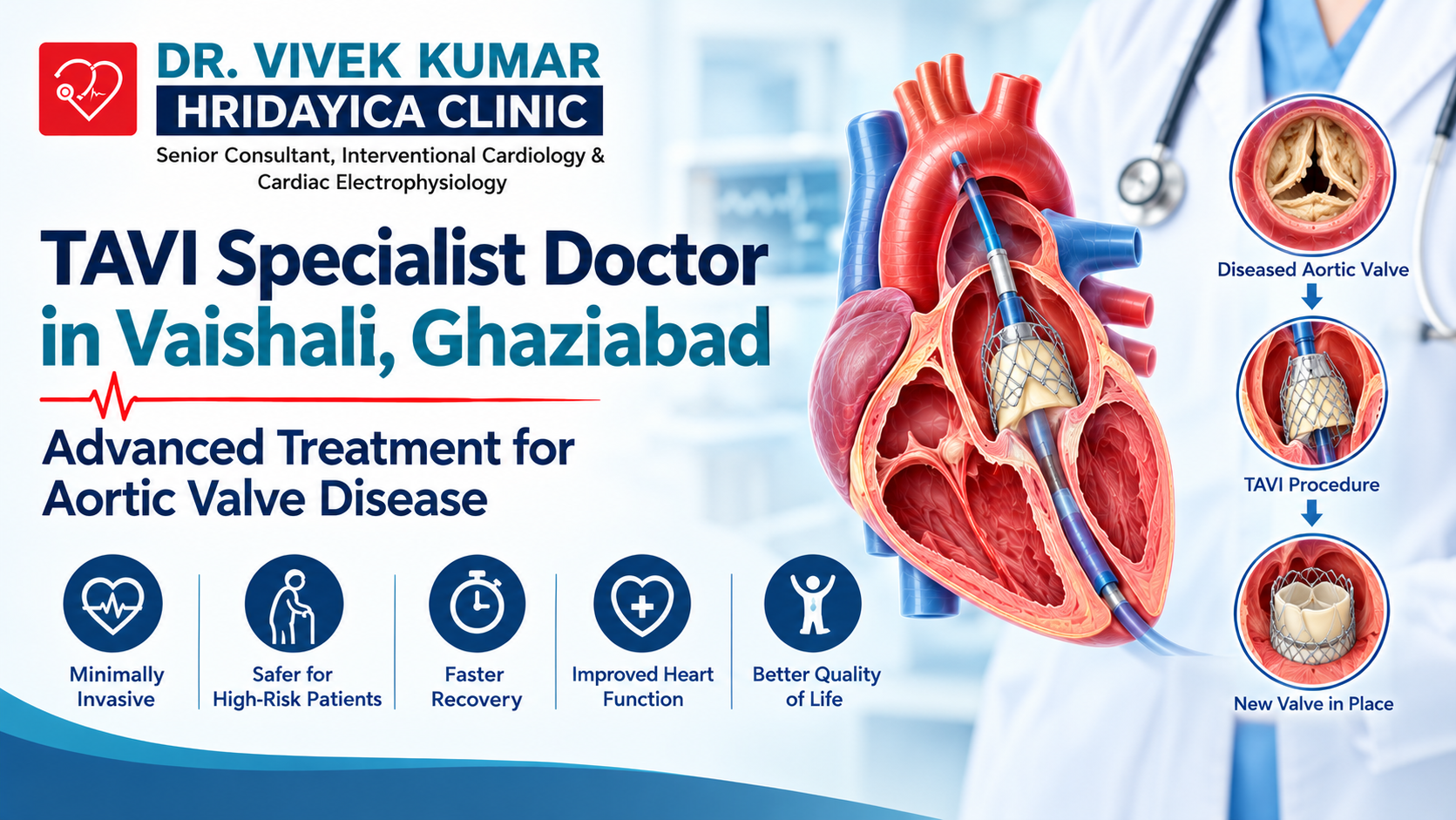
Heart valve diseases can affect the heart’s ability to pump blood efficiently, leading to symptoms such as breathlessness, chest pain, fatigue, and dizziness. One of the most common conditions affecting the heart valves is aortic stenosis, in which the aortic valve becomes narrowed and restricts blood flow from the heart to the rest of the body. With advances in cardiac care, Transcatheter Aortic Valve Implantation (TAVI) has emerged as an important minimally invasive treatment option for selected patients with severe aortic stenosis.
If you are searching for a TAVI specialist doctor in Vaishali, Ghaziabad, understanding the procedure, its benefits, and the importance of specialist evaluation can help you make informed decisions about your heart health.
At Hridayica, patients can explore information about advanced cardiac care and consult qualified heart specialists for appropriate evaluation and treatment planning.
What Is TAVI Surgery?
Transcatheter Aortic Valve Implantation, commonly known as TAVI or TAVR, is a minimally invasive procedure used to treat severe aortic valve stenosis in eligible patients.
In aortic stenosis, the aortic valve becomes narrowed, making it difficult for the heart to pump oxygen-rich blood throughout the body. This condition may develop due to age-related calcium buildup, congenital valve abnormalities, or other underlying factors.
During TAVI, a replacement valve is delivered to the heart through a catheter, often inserted through an artery in the groin. The new valve is positioned within the diseased aortic valve to improve blood flow.
Unlike traditional open-heart valve replacement surgery, TAVI generally does not require opening the chest or stopping the heart. However, its suitability depends on the patient’s medical condition, anatomy, and overall risk profile.
Who May Need TAVI Surgery?
A cardiologist may recommend an evaluation for TAVI when a patient has severe aortic stenosis. The decision depends on the severity of the disease, symptoms, test results, and other health conditions.
Patients who may be considered for TAVI include:
- Individuals diagnosed with severe aortic stenosis.
- Older adults who may benefit from a less invasive valve replacement approach.
- Patients experiencing breathlessness or fatigue due to aortic valve disease.
- Individuals with chest discomfort, dizziness, or fainting associated with severe aortic stenosis.
- Patients for whom a heart team considers TAVI an appropriate alternative to surgical aortic valve replacement.
Not every patient with aortic stenosis requires TAVI. A detailed assessment by an experienced cardiac team is essential to determine the most suitable treatment option.
Common Symptoms of Aortic Valve Disease
Recognising the warning signs of aortic stenosis can help patients seek timely medical attention. Symptoms may develop gradually and become more noticeable as the condition progresses.
Common symptoms include:
1. Shortness of Breath: Difficulty breathing during physical activity or while performing routine tasks may indicate that the heart is struggling to pump blood effectively.
2. Chest Pain: Chest discomfort or pressure, particularly during exertion, can be associated with severe aortic stenosis.
3. Fatigue and Weakness: Reduced blood flow may cause persistent tiredness and difficulty completing everyday activities.
4. Dizziness or Fainting: Some patients experience light-headedness or fainting, particularly during physical activity.
5. Reduced Exercise Tolerance: Patients may notice that walking, climbing stairs, or other routine activities have become increasingly difficult.
Anyone experiencing these symptoms should consult a healthcare professional. Severe chest pain, fainting, or sudden breathing difficulty requires urgent medical assessment.
TAVI Surgery in Vaishali: Understanding the Procedure
Patients looking for TAVI surgery in Vaishali should understand the different stages involved in treatment. The procedure requires careful planning, specialised equipment, and a multidisciplinary cardiac team.
1. Pre-Procedure Evaluation
Before recommending TAVI, the medical team evaluates the patient’s heart condition and overall health. Investigations may include echocardiography, electrocardiography, CT scans, and other tests to assess the aortic valve and determine the appropriate replacement valve.
2. Catheter-Based Valve Placement
During the procedure, a catheter carrying the replacement valve is guided through a blood vessel to the heart. The new valve is positioned within the diseased aortic valve and deployed to restore more effective blood flow.
The exact technique depends on the patient’s anatomy and the selected treatment approach.
3. Monitoring and Recovery
After TAVI, the patient is monitored for heart rhythm changes, bleeding, vascular complications, and valve function. Recovery time varies depending on age, general health, and whether complications occur.
The treating team provides instructions regarding medication, follow-up visits, physical activity, and long-term monitoring.
Why Consult a TAVI Specialist in Ghaziabad?
Choosing an experienced cardiac specialist is an important step when considering treatment for aortic valve disease. A TAVI specialist in Ghaziabad can help patients understand their diagnosis, review available treatment options, and determine whether a transcatheter procedure is appropriate.
Important considerations when selecting a specialist include:
- Experience in structural heart disease: Knowledge of aortic valve disorders and advanced valve treatment options.
- Comprehensive diagnostic evaluation: Appropriate assessment of valve function, symptoms, and overall cardiovascular health.
- Individualised treatment planning: Recommendations based on the patient’s age, medical history, anatomy, and surgical risk.
- Multidisciplinary care: Coordination among cardiologists, cardiac surgeons, imaging specialists, and other healthcare professionals when needed.
- Follow-up support: Regular monitoring to assess valve function and overall heart health after treatment.
Patients should discuss the expected benefits, potential risks, alternative treatments, and recovery requirements with their treating team before making a decision.
TAVI Surgery in Ghaziabad: Benefits and Important Considerations
For appropriately selected patients, TAVI surgery in Ghaziabad may offer several advantages over conventional open-heart valve replacement.
Potential benefits include:
- A minimally invasive approach to aortic valve replacement.
- No need for conventional open-chest surgery in most cases.
- Potentially shorter hospital stays.
- Faster initial recovery for some patients.
- Improved symptoms and quality of life when treatment successfully addresses severe aortic stenosis.
However, TAVI is still a major cardiac procedure and is not free from risks. Potential complications include bleeding, blood vessel injury, stroke, heart rhythm disturbances, leakage around the replacement valve, and kidney-related complications.
The long-term performance of the replacement valve and the patient’s individual circumstances must also be considered. A specialist heart team can explain these factors and help patients compare TAVI with surgical valve replacement.
How Is TAVI Different from Traditional Valve Replacement Surgery?
Traditional surgical aortic valve replacement involves removing or replacing the diseased valve through cardiac surgery. TAVI, on the other hand, uses a catheter-based technique to implant a new valve.
The choice between these procedures depends on several factors, including the patient’s age, valve anatomy, associated heart conditions, expected valve durability, surgical risk, and personal preferences.
While TAVI may be suitable for many patients, conventional surgery remains an important treatment option for others. The decision should be made after a comprehensive evaluation by an experienced heart team.
Finding a TAVI Doctor in Vaishali
If you are searching for a TAVI doctor in Vaishali, begin by seeking a cardiology consultation to confirm the diagnosis and understand the severity of aortic valve disease.
Your consultation may involve reviewing previous echocardiograms, discussing symptoms, assessing other medical conditions, and determining whether additional investigations are required.
Similarly, patients searching for a TAVI doctor in Ghaziabad should prioritise a specialist who can explain the available treatment approaches and coordinate appropriate care.
A TAVI specialist in Vaishali or a TAVI specialist in Ghaziabad can help eligible patients understand whether transcatheter valve implantation is appropriate for their condition. Patients should also confirm that the recommended facility has the necessary cardiac team, procedural capabilities, and post-procedure monitoring arrangements.
Consult Dr. Vivek Kumar at Hridayica
Dr. Vivek Kumar is associated with Hridayica and provides cardiac care. Patients looking for information about advanced heart treatments can explore the services available through Hridayica and seek an appropriate consultation to discuss their cardiovascular concerns.
If you or a family member has been diagnosed with aortic stenosis, consult a qualified cardiologist to understand the available treatment options, including whether TAVI evaluation may be appropriate.
A specialist consultation can help clarify the diagnosis, assess the severity of valve disease, and establish an individualised treatment plan based on clinical findings.